
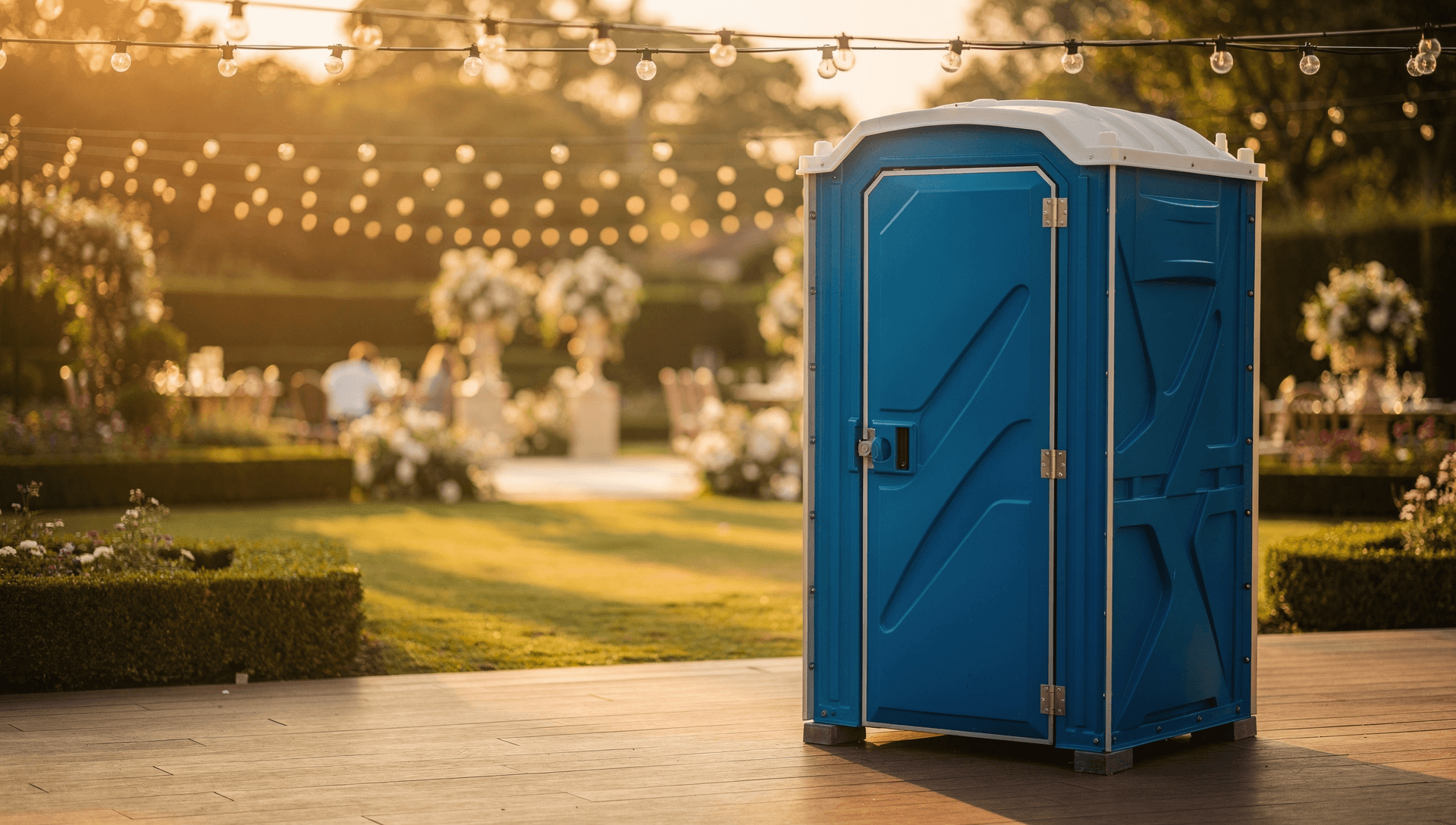
Restroom Trailer vs Porta Potty
A restroom trailer is not just a nicer porta potty. It changes cost, setup, water and power needs, ADA planning, and guest experience. Here is when each option makes sense.
Choose porta potties for lower cost, construction sites, scattered placement, high unit counts, and basic event capacity.
Choose a restroom trailer for weddings, VIP areas, formal events, corporate events, and situations where guests expect flushing toilets, sinks, lighting, mirrors, and climate control.
Cost difference: standard units often run $150-$325/week; restroom trailer event packages often start around $1,500-$2,500+ once delivery, setup, and utility needs are included.
Cost comparison
| Option | Typical cost | Best fit | Watch-outs |
|---|---|---|---|
| Standard porta potty | $150-$325/week | Construction, budget events, outdoor capacity | Basic guest experience, no running water |
| Deluxe flushing unit | $200-$400/week | Small weddings, parties, nicer single-stall option | Still a standalone portable toilet |
| 2-stall restroom trailer | $1,500-$2,000+ event package | Small weddings, private events, VIP staff areas | Power, water, level placement, delivery access |
| 4-8 stall restroom trailer | $2,000-$3,500+ event package | Larger weddings, corporate events, festivals | Setup needs, inventory, ADA planning, generator needs |
Guest experience
A standard porta potty solves capacity. A restroom trailer solves comfort. Trailers can include flushing toilets, sinks, running water, lighting, mirrors, countertops, heat, and air conditioning. That matters at weddings, fundraisers, formal events, and corporate events where guests are dressed up and will notice the restroom experience.
Deluxe standalone units sit in the middle. They can be a good upgrade for smaller events where a trailer is too expensive or where the site cannot support trailer setup.
If you are unsure, ask for both prices on the same call: the full restroom trailer quote and a deluxe standalone-unit backup. That keeps the quote conversation useful even when trailer pricing is higher than expected.
Setup requirements
Porta potties are flexible. They can be placed on a level, accessible surface and serviced by a pump truck. Restroom trailers need more planning. Many trailers need power, water planning, a level pad, towing access, and space for steps or ramps.
- Power: confirm outlet distance or generator needs.
- Water: confirm hose access or onboard freshwater.
- Placement: trailers need a level, stable area with tow access.
- Access: delivery vehicles need more room than a standard unit delivery.
- ADA: confirm whether the trailer itself is ADA-accessible or whether separate ADA units are needed.
When porta potties win
Standard units usually win when the goal is coverage at a reasonable price: construction sites, public works projects, large festivals with distributed restroom banks, parking lots, emergency rentals, and remote locations. They are easier to place, easier to scale, and easier to service.
When trailers win
Restroom trailers usually win when a small number of higher-quality stalls can serve the event better than many standalone units. Weddings, VIP areas, film sets, private parties, and corporate hospitality areas are the classic use cases.
For wedding-specific planning, see the wedding porta potty planning guide. For prices by unit type, use the nice porta potty cost section of the cost guide.
Simple decision rule
If guests will judge the event by the restroom experience, price a trailer. If you mainly need capacity, jobsite compliance, or low-cost restroom coverage, price standard units. If you are between the two, price deluxe flushing units and a small trailer side by side.
Frequently Asked Questions
Is a restroom trailer better than a porta potty?
For weddings, VIP areas, corporate events, and upscale private events, a restroom trailer usually gives a better guest experience. For construction sites, budget events, and scattered placement, standard porta potties are usually cheaper and more flexible.
How much does a restroom trailer cost compared with porta potties?
A standard porta potty often runs $150-$325 per week. Restroom trailer event packages often start around $1,500-$2,500+ once delivery, setup, inventory, and utility needs are included, with larger or premium trailers costing more.
When is a restroom trailer worth it?
It is usually worth it when guest experience matters, the event is formal, guests are dressed up, alcohol is served, or you need flushing toilets, sinks, mirrors, lighting, and climate control.
Do restroom trailers need water and power?
Many restroom trailers need power and may need water or onboard water planning. Confirm generator, outlet, hose, freshwater, and graywater requirements before booking.
Do I still need ADA units with a restroom trailer?
Maybe. Many trailers are not ADA-accessible unless specifically designed that way. Public events often still need ADA-compliant portable toilets on accessible routes. Confirm local permit requirements.